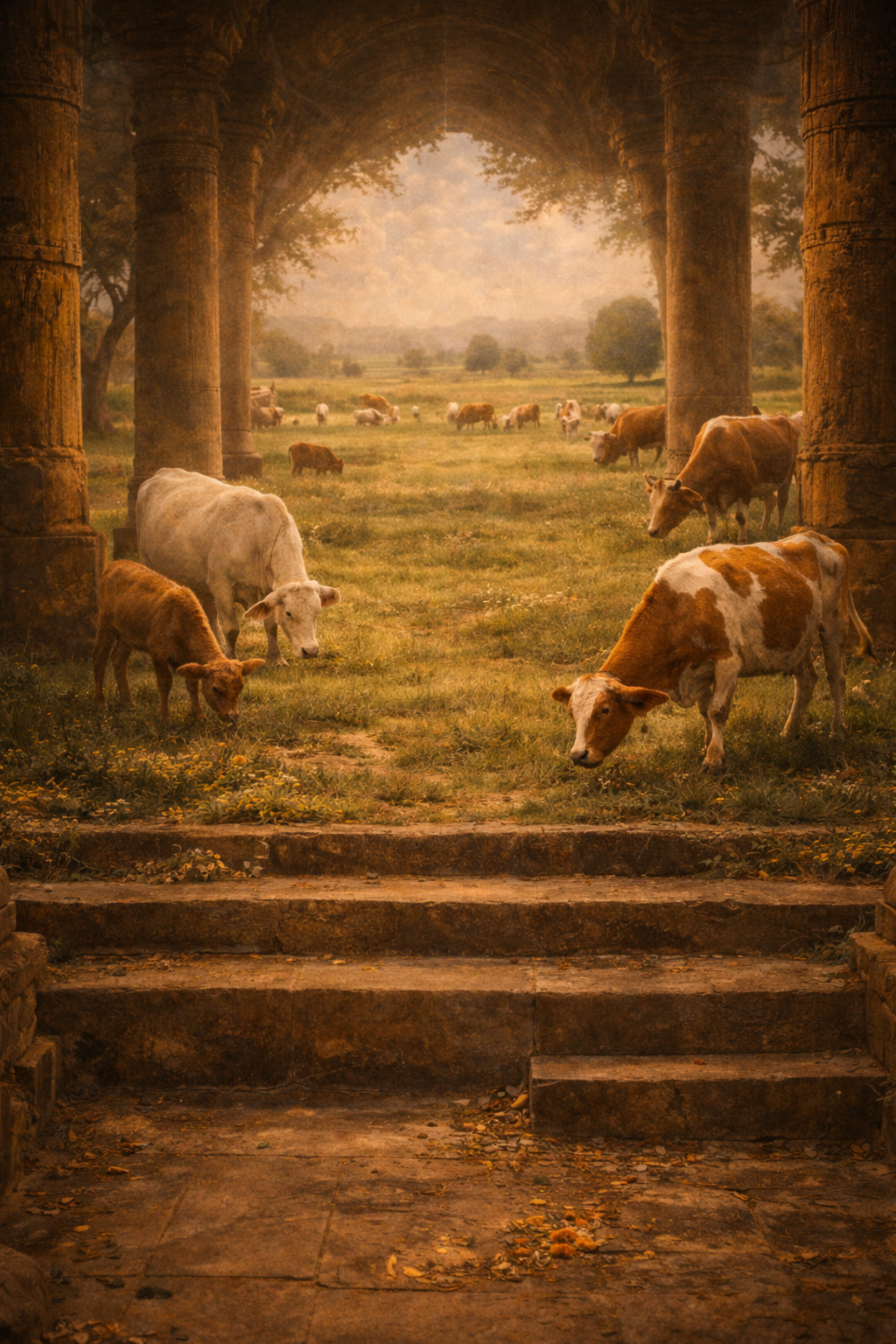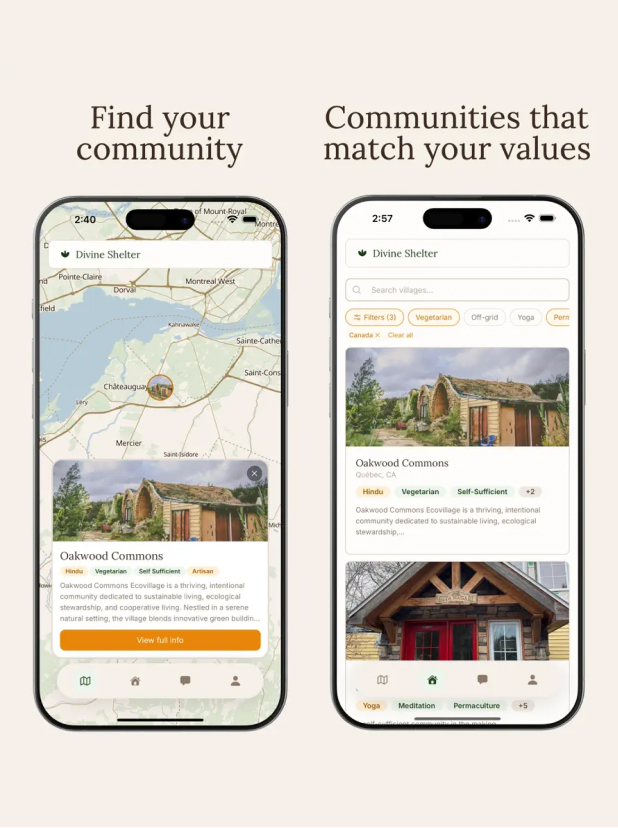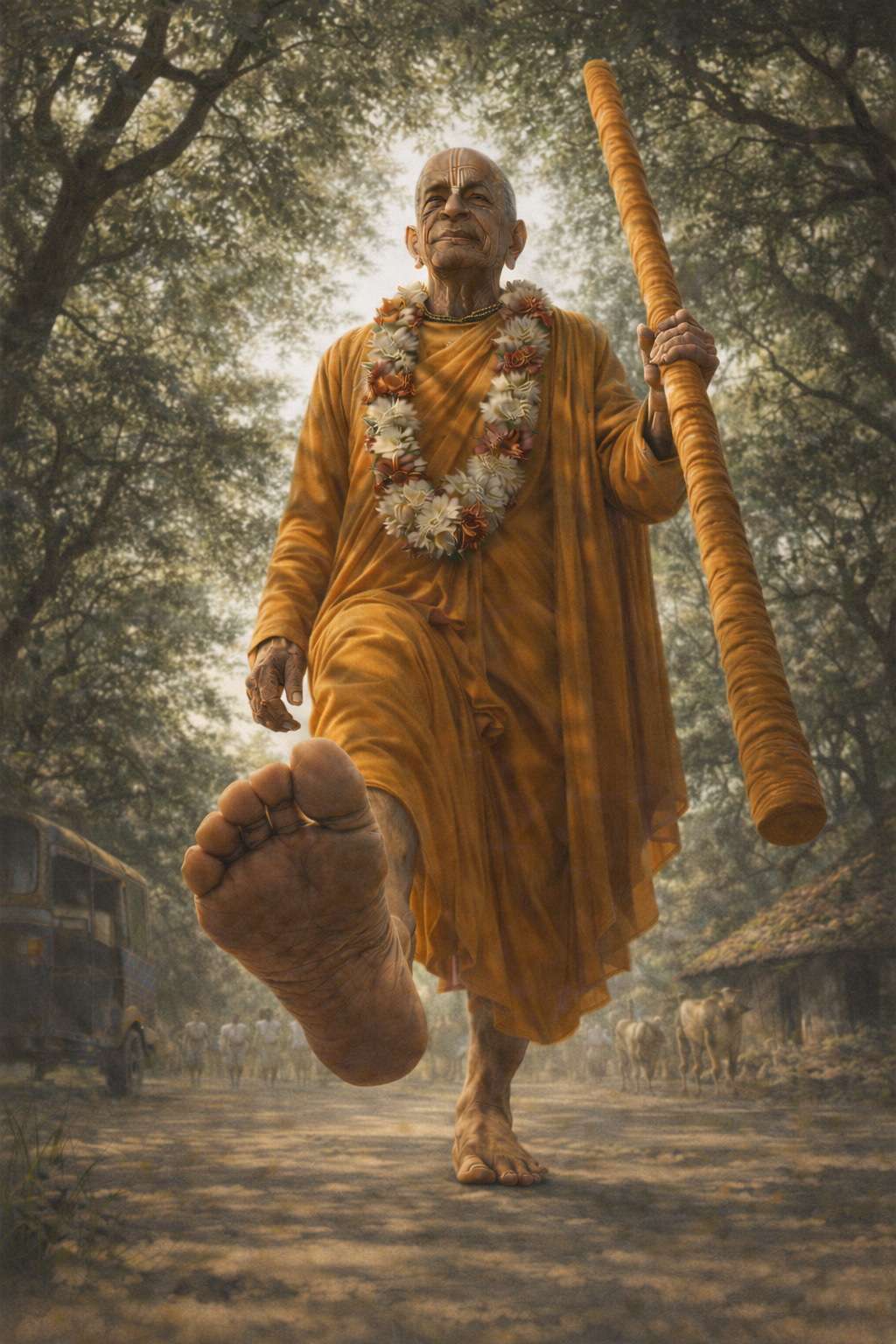

Make Vrindavan Villages arises from the need to re-establish a way of life rooted in simple living and high thinking. The project begins from a simple observation: spiritual culture needs a living environment, not only occasional programs, online meetings, or isolated inspiration. It needs land, relationships, daily service, education, food systems, worship, and time.
The first stage in British Columbia is therefore focused on gathering the right people around the right questions. What does a contemporary Vedic village need in order to be both faithful to Srila Prabhupada's vision and practical for families today? How can community life be built without becoming dependent on fragile systems? How can devotion, work, learning, and ecology support one another rather than compete for attention?
Beginning With People, Not Infrastructure
The early work is less dramatic than a groundbreaking ceremony, but it is more important. A village cannot be assembled only from plans, donations, and construction schedules. It has to grow from people who are willing to share responsibility, accept inconvenience, and build trust through repeated service. That is why the first phase is centered on conversation, mapping skills, clarifying commitments, and identifying those who are ready to participate in a long-term way.
Four Areas of Immediate Work
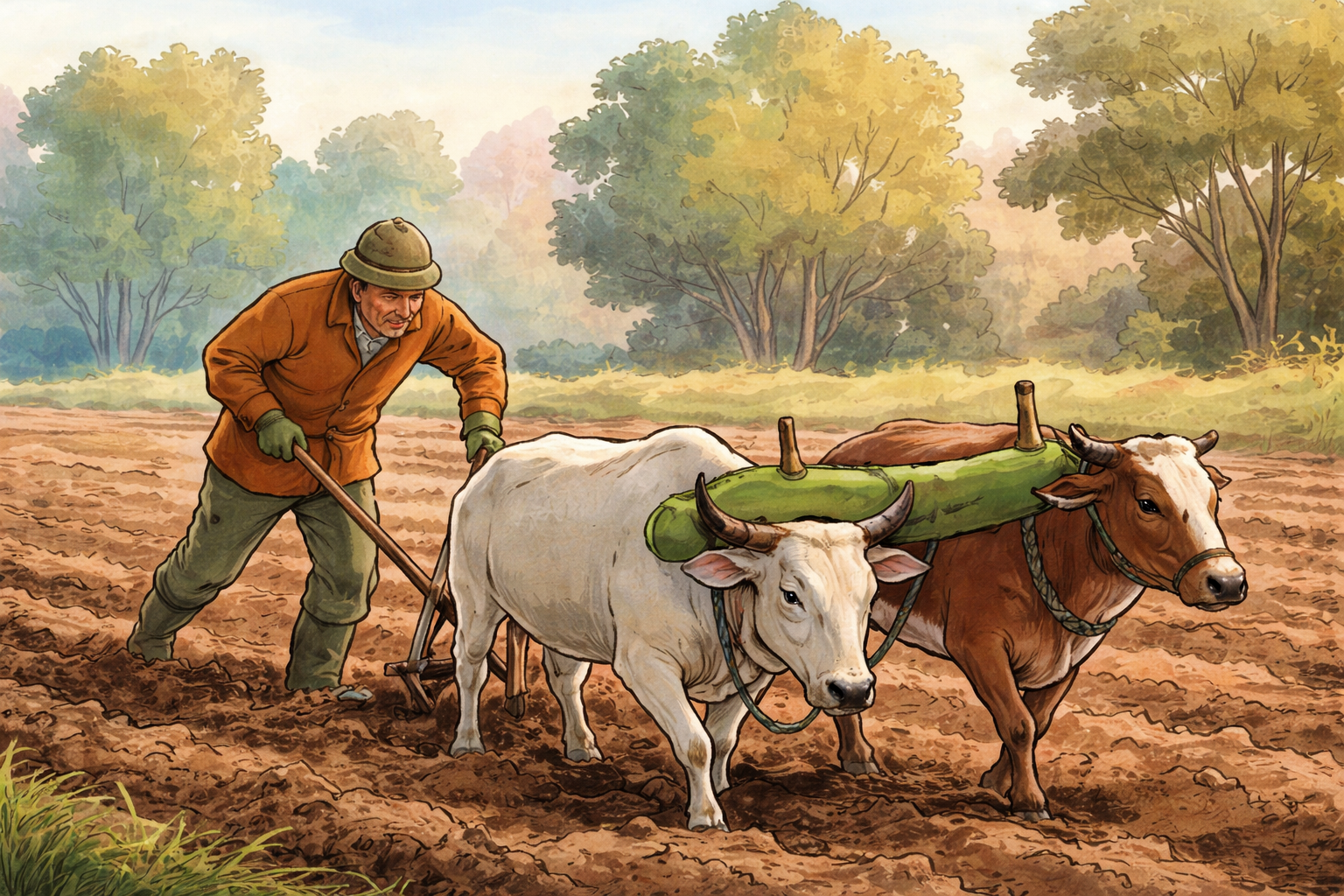
The initiative is currently being organized around four connected areas: community formation, land and stewardship, education, and economic resilience. Each area has its own practical questions, but none of them can be solved separately. A school needs families. Farming needs land and trained hands. Cow protection needs economics, care, and culture. Spiritual life needs daily rhythm and shared standards.
Community formation begins with people who understand that village life is not an escape from responsibility. It is a deeper form of responsibility. The work includes identifying families, teachers, farmers, builders, organizers, donors, and spiritual mentors who can help make the vision real without reducing it to a lifestyle experiment.
Land and stewardship require a sober assessment of what is possible. The aim is not simply to acquire property, but to care for a place in a way that supports cows, gardens, forest, water, housing, education, worship, and guests. The land must be understood as a sacred trust, not just as a site for development.
Education as the Heart of the Village
Education is not being treated as a later addition. It is central from the beginning. A village meant to last must educate children, train adults, preserve sacred knowledge, and pass on practical skills. That includes scripture, language, music, agriculture, crafts, cooking, cow care, ecology, and the social intelligence needed to live cooperatively.
The long-term goal is not only to create a place where devotees can live, but a place where people can learn how to live differently. In this sense, the village is also a school. Its curriculum is not limited to classrooms. It is carried by the daily schedule, the way food is grown and offered, the way elders are honored, the way conflict is resolved, and the way children see adults serve.
Looking Ahead
The next phase will focus on expanding the circle of committed participants, clarifying the organizational structure, and preparing the practical roadmap for land, education, farming, and community life. This work will take patience. It will require careful decisions, honest conversations, and a willingness to build slowly enough that the foundation can hold.
Make Vrindavan Villages is not only a local project. It is part of a wider effort to connect and support Vedic villages around the world. The British Columbia initiative is one step in that larger movement: a step toward community, land, devotion, and a future shaped by simple living and high thinking.