

Govardhan Puja
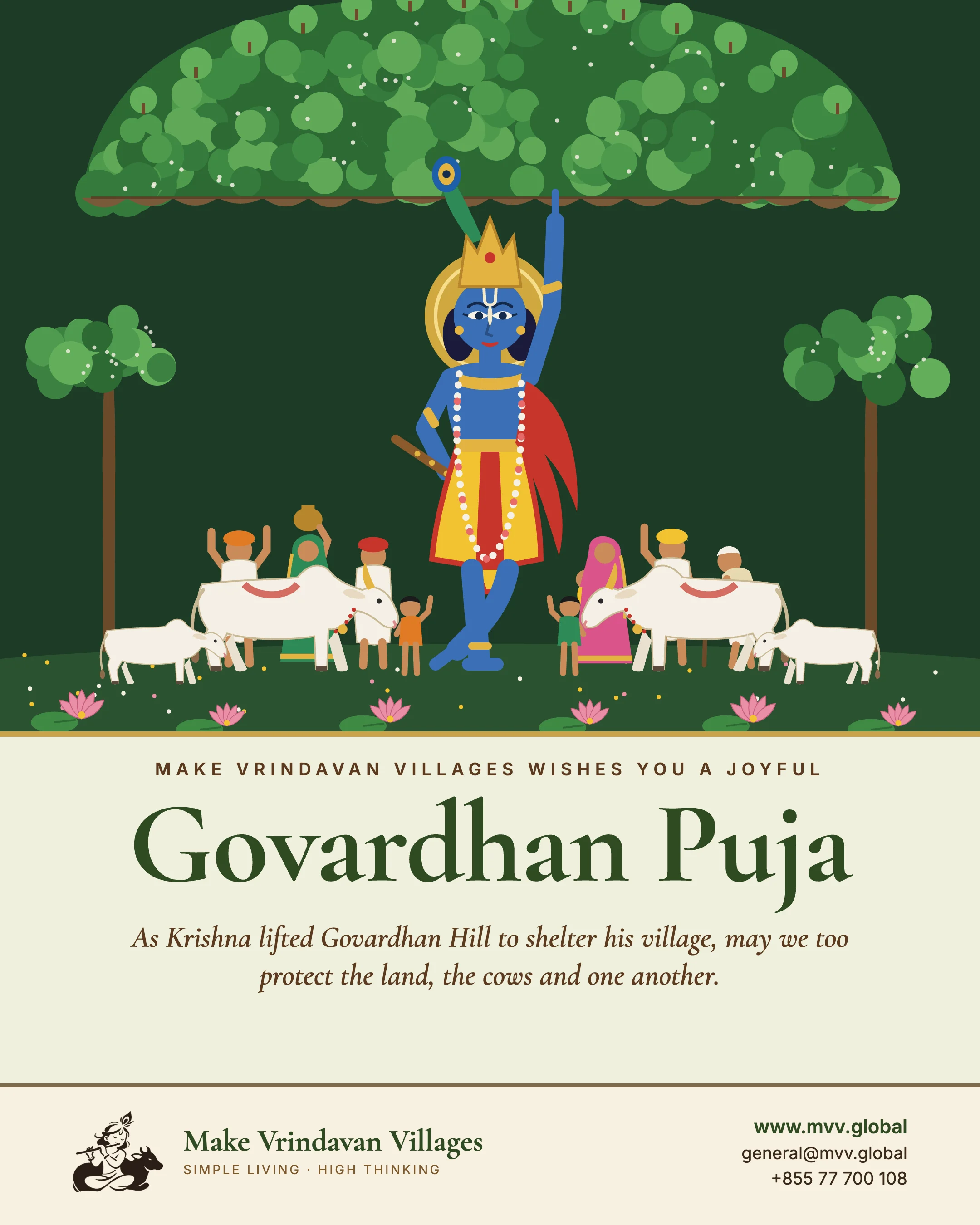
The rain would not stop. For seven days storm clouds poured water on a small village of cowherds, and the rivers began to rise. Then a seven-year-old boy walked to the hill at the edge of the village, lifted it with one finger, and called everyone to come underneath. Families, children, cows and calves all crowded in, dry and safe, until the sky cleared. That is the story behind Govardhan Puja, a festival celebrated the day after Diwali. In 2026 it falls on Tuesday, 10 November. At Make Vrindavan Villages, it is one of our favourite days of the year, because it is all about the things we care for most: the land, the cows and the village community.
Why was the hill lifted?
The boy was Sri Krishna, who grew up among the cowherds of Vrindavan in Bharat. Every year the villagers held a big ceremony for Indra, the god of rain, hoping for a good season. Sri Krishna suggested something different. Why not thank the hill right in front of them, Govardhan, which gave their cows grass, their families water and their children fruit? The villagers agreed and offered their feast to the hill instead. Indra took offence and sent the great storm. Sri Krishna's answer was not to fight the storm, but to protect everyone from it
Your questions about Govardhan Puja
What does "Govardhan" mean? | It is the name of a real hill near Vrindavan. The word means "that which nourishes the cows". Puja simply means honour or worship. |
What is the Annakut? | Annakut means "mountain of food". Families cook many vegetarian dishes, sometimes dozens, and arrange them in a heap like a hill. The food is offered with gratitude and then shared with everyone. |
Why are cows honoured on this day? | In a traditional village, the cow gives milk, helps plough the fields and provides natural fertiliser. On Govardhan Puja, cows are bathed, decorated with flowers and colours, and given special food as a thank-you. |
Do I need to be Hindu to celebrate it? | No. Its message of thanking nature, caring for animals and sharing food with neighbours belongs to everyone. Anyone who has ever grown a garden or looked after an animal will understand it. |
Three lessons from the hill
Protect, don't exploit. Krishna used his strength to shelter others. The land and the animals around us deserve the same care, not to be used up and thrown away.
Look close to home. The villagers found everything they needed in the hill beside them. Local food, local water and local community are still the best shelter in hard times.
No one is left outside. Under the hill, rich and poor, people and animals stood side by side. A true community makes room for everyone.
Building today's Vrindavan
The village in this story is the picture that gives Make Vrindavan Villages its name. MVV helps communities and farm projects build self-sufficient villages, where people grow their own food, protect the soil, water and forests, and care for cows with love. Here in Cambodia, a land of rice fields and village life, we see that old wisdom waiting to be lived again.
Celebrate it yourself
- Shape a small hill from earth, rice or sweets and decorate it with flowers.
- Cook a few simple dishes from local ingredients and share them with neighbours.
- Visit a farm or cow shelter and bring fresh grass or fruit.
- Tell the story of the hill to your children, or act it out together.
May the land that feeds us always be protected, and may we always find shelter together. Happy Govardhan Puja from the Make Vrindavan Villages family.